
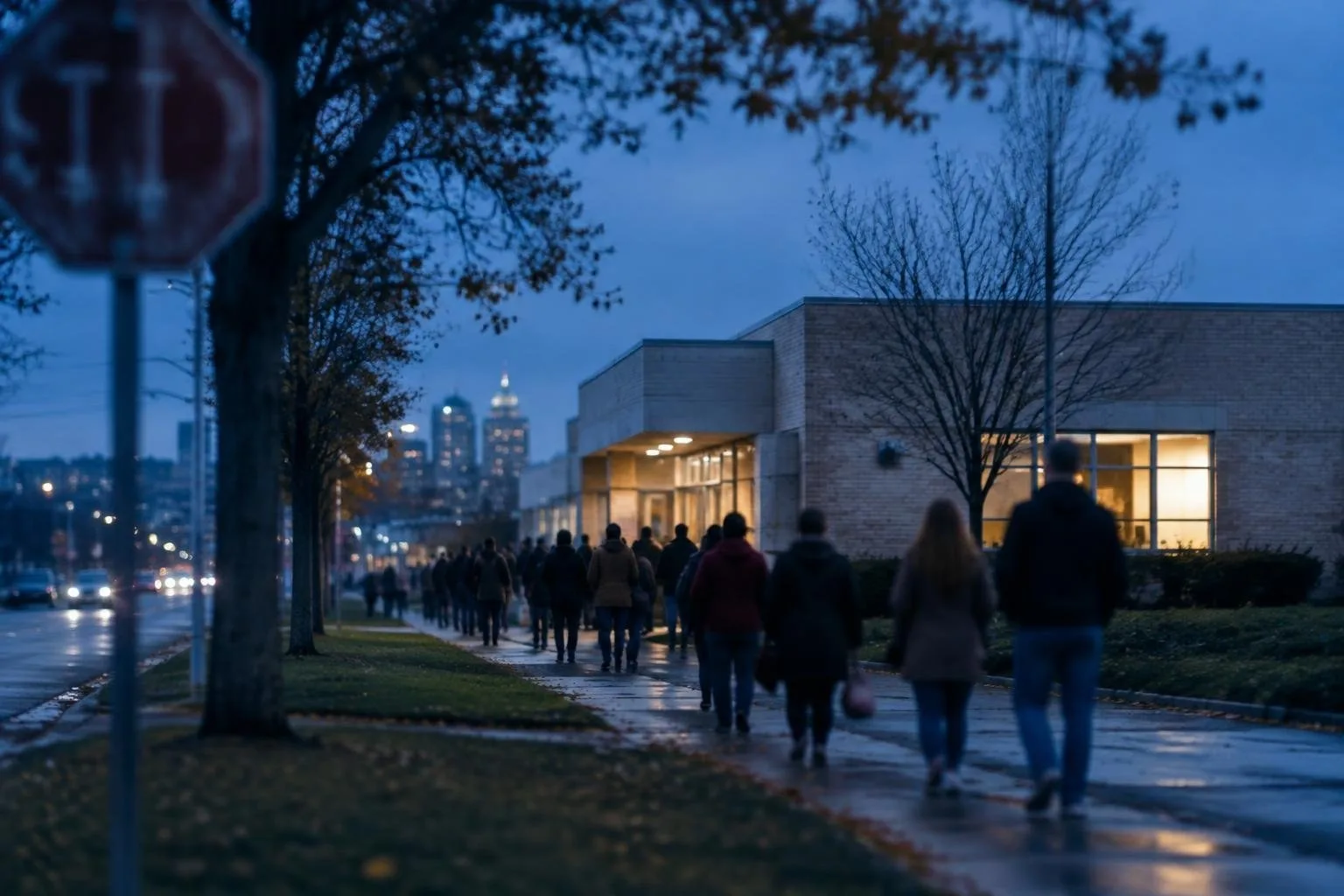
When the polls opened on Election Day in Ohio, a nervous teenager from Maple Heights walked into a polling place that would become the backdrop of his first civic act. The day, November 3, 2026, marked not only a personal milestone but also a historic shift: Ohio’s statewide contests turned blue, with Democrat Amy Acton winning the governor’s race and former Senator Sherrod Brown reclaiming his seat in the U.S. Senate.
Early voting had been available from Oct. 6 to Nov. 1, and the Ohio Voted stickers that appeared on the backs of voters’ hands served as bright reminders of participation. For the Maple Heights voter, the sticker was more than a souvenir; it symbolized his transition from a spectator watching his parents cast ballots to an active participant shaping the state’s future.
First-time voting in Maple Heights
Arriving during a relatively quiet window, the teenager quickly realized he was the youngest person in the room. After informing the poll workers that it was his inaugural vote, the two women at the desk announced his status aloud, prompting spontaneous applause from fellow voters. The welcoming atmosphere neutralized any lingering anxiety and allowed him to focus on the ballot itself.
When the moment arrived to mark his choices, he faced a dilemma. Despite extensive research on both major parties, none of the leading candidates resonated with him. Consequently, he opted for the Libertarian ticket, selecting Don Kissick for governor and Bill Redpath for the Senate. While he did not expect these candidates to win, the decision felt authentic because it was made independently.
Statewide contests and outcomes
Across Ohio, the midterm ballot featured high-profile races. The governor’s race pitted Dr. Amy Acton against Republican entrepreneur Vivek Ramaswamy. In the U.S. Senate, incumbent Republican Jon Husted faced former Democratic Senator Sherrod Brown. Other statewide positions included the race for state auditor between Republican Frank LaRose and Democratic Annette Blackwell, and the contest for secretary of state involving Republican Robert Sprague, Democrat Allison Russo, and Libertarian Tom Pruss.
Ohio’s 4th Congressional District also drew national attention. Incumbent Jim Jordan (R-Urbana) was challenged by Democrat Josh D. Kolasinki and independent Tracey L. Tackett. The results of these races, combined with the governor’s and Senate outcomes, signaled a noteworthy partisan shift in a state traditionally viewed as a swing battleground.
Local races and ballot measures that mattered
Beyond statewide headlines, voters in several counties faced decisions that would affect daily life. In Richland County, the commissioner’s race featured Republican incumbent Cliff Mears versus Democrat Mark Kaufmann. Probate judge incumbent Kelly Badnell defended her seat against challenger Robert Franco. For the 76th ohio house District, Republican Marilyn John was opposed by Democrat Colton Stidam.
Municipal levies also appeared on many ballots. Residents of Shelby voted on renewal proposals for the Parks Department and the Health Department. Voters in the Lexington Local School District considered two tax measures: a new 0.75% earned-income tax levy and a 4.8-mill renewal levy. Meanwhile, the Madison Local School District placed a 14.4-mill renewal levy before its constituents. These questions reflected local governments’ need for stable funding to maintain services and infrastructure.
Across the state, the Ohio Voted insignia was visible during early voting on Oct. 27, 2026, at the Summit County Board of Elections in Akron. The sticker, handed out after casting a ballot, became a small but tangible reminder of civic duty, echoing the teenager’s earlier experience in Maple Heights.
For voters seeking a quick reference, the key takeaways are: – The governor’s race concluded with Democrat Amy Acton winning. – Sherrod Brown reclaimed the U.S. Senate seat. – Local races in Richland County and the 4th Congressional District were closely contested. – Multiple tax levies, including a 0.75% income tax in Lexington and a 14.4-mill renewal in Madison, required voter approval. – Early voting spanned from Oct. 6 to Nov. 1, with polling hours on Election Day running from 6:30 a.m. to 7:30 p.m.
Ultimately, the experience underscored that election day is more than marking circles – it is an occasion for community interaction, personal reflection, and collective decision-making. Whether the ballot featured a high-profile gubernatorial contest or a small-scale school levy, every vote contributed to the larger tapestry of Ohio’s democratic process.