
The Dearborn County planning and zoning commission met on Thursday and chose to table a draft zoning amendment that would overhaul the county’s rules for utility-scale solar farms. The vote came after a heated session in which residents, farmers, and commission members voiced sharply divergent views on the balance between renewable-energy development and the preservation of agricultural territory. By postponing the measure, commissioners signaled that the proposal needs further refinement before it can be forwarded to the county’s governing body.
Earlier this year, in February, the Dearborn County Commission imposed a one-year moratorium on new solar projects while officials drafted a regulatory framework. That pause was intended to give the county time to consider the impacts of large-scale solar installations on the region’s rural character and on the value of farmland. The moratorium is still in effect, and the pending amendment is meant to replace it with concrete limits once a consensus is reached.
Key elements of the proposed amendment and their origins
The draft amendment draws heavily from a citizen-submitted model ordinance that seeks stricter safeguards against expansive solar farms. Among its most notable provisions is a requirement that any developer must organize, fund, and publicize a community meeting before filing a formal application. This clause, now under discussion, would place the cost of outreach directly on the project sponsor, ensuring that neighbors receive advance notice and an opportunity to comment.
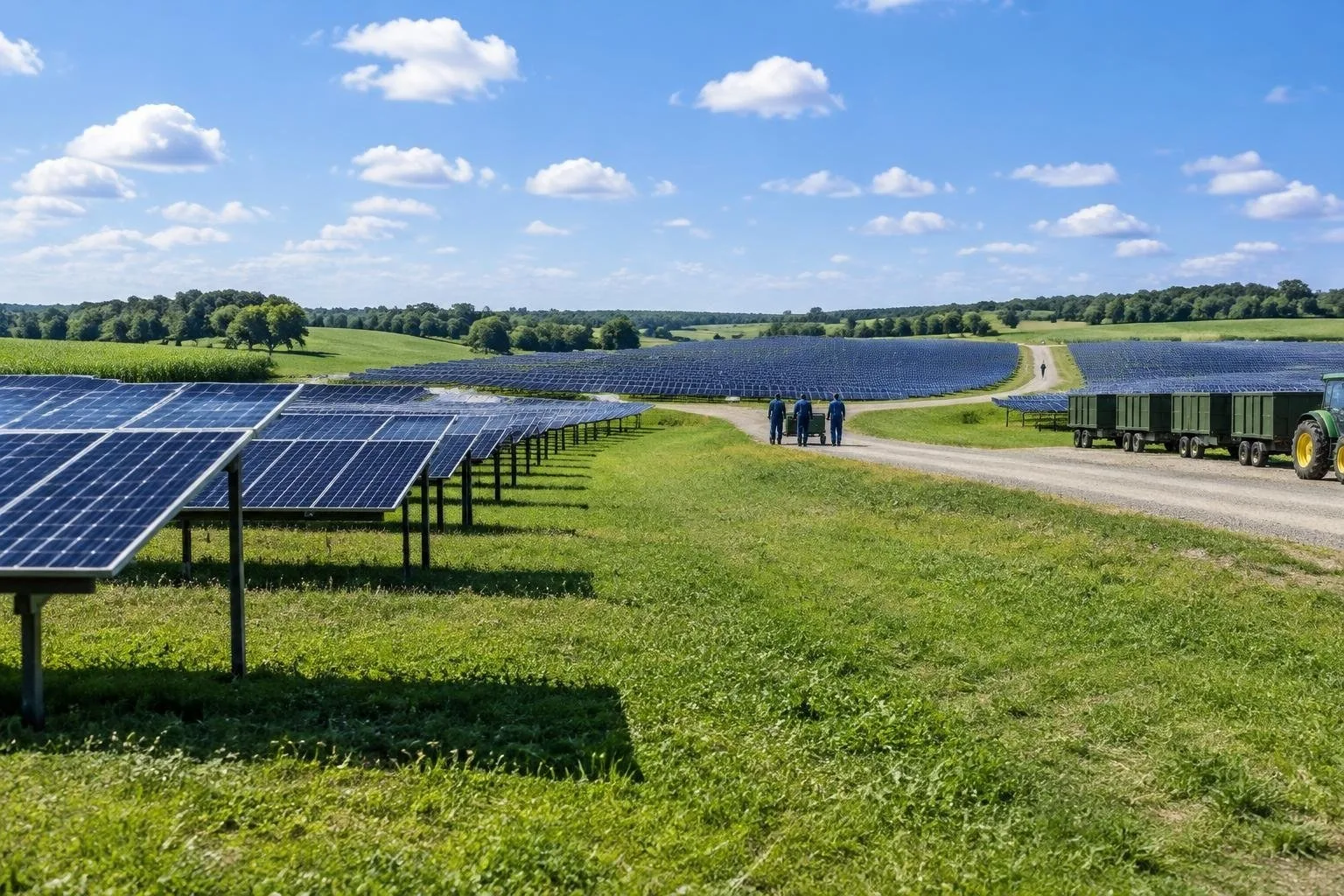
Size limits also feature prominently. The proposal caps any single solar project at 200 acres per farm owner, while allowing multiple owners to collaborate on sites ranging from 500 to 700 acres. Additionally, the amendment would restrict the total amount of agricultural land devoted to solar energy to roughly 3 percent of the county’s farmland—approximately 1,800 acres. These figures were designed to keep large installations from overwhelming the county’s largely agrarian landscape.
Community reaction and political fallout
Opposition intensified after Linea Energy submitted a plan for a 1,200-acre solar development near Manchester. Local farmers and homeowners argued that such a project would erode the county’s farming base and alter its visual identity. During the Thursday session, a farmer already under contract with Linea Energy warned that the proposed caps would effectively eliminate the economic feasibility of utility-scale solar in the area, stating, “You’ve effectively banned utility-scale solar with what you’re talking about here tonight.” The comment underscored fears that stringent regulations could deter investment and diminish the county’s ability to meet renewable-energy goals.
Property-rights concerns also surfaced. Some residents questioned whether the timing of an application could unfairly advantage or disadvantage landowners, especially if neighboring parcels pursue similar projects at different intervals. One commissioner suggested that Linea Energy might sue the county over perceived discrimination, while another expressed exasperation, indicating that the two sides might simply have to agree to disagree.
What lies ahead for the amendment
The planning commission has scheduled a follow-up meeting for the upcoming Tuesday, where members will revisit the amendment and consider incorporating feedback from the public session. Should the commission reach a recommendation, the proposal will move to the Dearborn County Commission for a final vote. The outcome will determine whether the county proceeds with detailed, enforceable limits on solar farms or returns to a more permissive framework that could accommodate larger, multi-hundred-acre projects.